Here’s a snippet of “Kitty alone,” a traditional kid’s song from Appalachia with a haunting melody and slightly surreal lyrics, on the ukelele and through the Empress Reverb and Echosystem.
Featuring a totally normal bedroom with an ultranormal amount of pedals.
Shot by Sandy Zelazy (AKA Silver Reeds). We actually spent nearly the whole time singing and playing acoustically into a single mic, believe it or not, that’ll get a more official release down the road.
Earnest TV, Episode 1, guest starring Hayley and Kris.
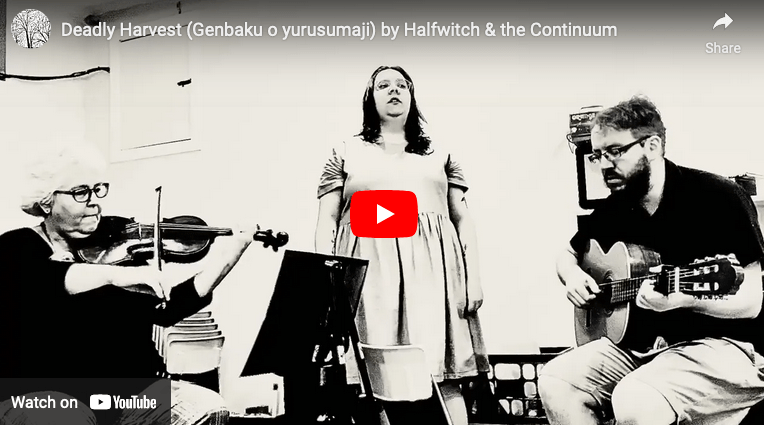
After coming together to play some songs at Ottawa’s Hiroshima & Nagasaki Peace Memorial Lantern Ceremony a couple of days ago, we reconvened to the Quaker house basement to create a record some of what we’d played.
“Deadly Harvest” is known in Japanese as 原爆を許すまじ or “Genbaku o yurusumaji” – “No More Atomic Bombs” or “We must never forgive the atomic bomb.” It was written in 1955 by Koki Kinoshita (music) and Ishiji Asada (words ). The English translation is by Ewan MacColl, with a few touch-ups from Tim.
(The reverby echo is coming from an Empress Reverb pedal that’s well-hidden by Tim’s head, plus that Orange MicroDark that is only half-hidden, hurrah.)
The lyrics and chords we used:
[Introductory verse in Japanese]
Furusato no machi yakare Mi yori no hone umeshi yaketsuchi ni Iwa wa shiroi hana saku Ah yurusumaji genbaku o [Refrain] Mitabi yurusumaji genbaku o Warera no machi ni
Verse 1 In the place where our city was destroyed Where we buried the ashes of the ones that we loved There the grass grows and the white waving weeds Deadly the harvest of two atom bombs
Refrain: Then brothers & sisters you must watch & take care That the third atom bomb never falls
2 The sky hangs like a shroud overhead And the sun’s in the cage of the black evening cloud No birds fly in the leaden sky Deadly the harvest of two atom bombs Then brothers & sisters…
3 Gentle rain carries poison from the sky And the fish carry death in the depths of the sea Fishing boats are idle, their owners are blind Deadly the harvest…
4 All that we have created with our hands All that is, all the glory of the world we live in Now it can be smashed, in a moment destroyed Deadly…
Verse chords: Am Dm E7 Am | Am E7 AmDm Am | – A7 Dm E7 | Am C E7 – Chorus chords: F Dm E7 Am / Dm E7 Am —
Slashes show line divisions, dashes mean repeat the previous chord, two chords squeezed together means play two chords in the time you normally play one.
“Step by Step” uses the melody of the traditional Irish song “The praties grow small,” a song about blight and starvation during the Potato Famine. The first verse was adapted by Waldemar Hills and Pete Seeger from the preamble of the constitution of the American Mineworkers Association (1963).
The last two verses are by Ottawa folk music stalwart Chris White.
VERSE 1
Step by step the longest march can be won, can be won Many stones can form an arch, singly none, singly none And in union what we will can be accomplished still Drops of water turn a mill, singly none, singly none
VERSE 2 Note by note the sweetest song can be sung, can be sung As our voices sing along, we are one, we are one Different colours rising high form a rainbow in the sky So together we will rise, singly none, singly none
VERSE 3 Thread by thread each slender strand, can be spun, can be spun And then woven hand to hand, one by one, one by one Making fabrics that enfold weak and strong, young and old Intertwined all lines shall hold, singly none, singly none
CHORDS: Am C Am — G Am G Am / ” / Am C – – – Dm – E / E7 Am G Am G Am E7 Am
(Slashes show line divisions, dashes mean repeat the previous chord, ditto/quotation mark means repeat the last line’s chords)
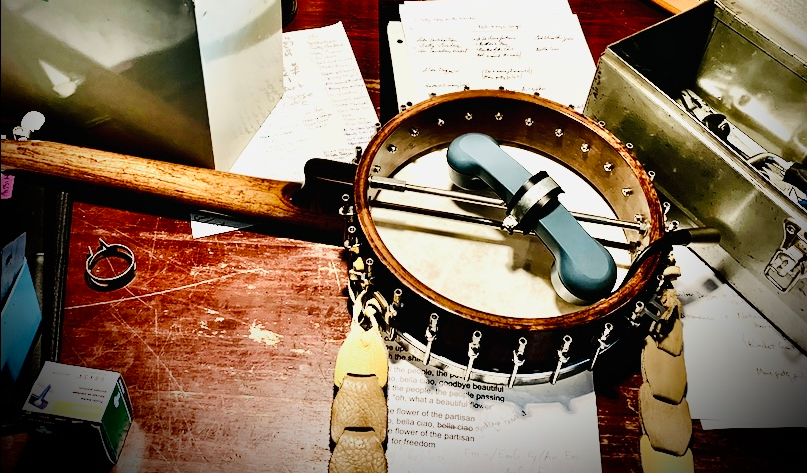
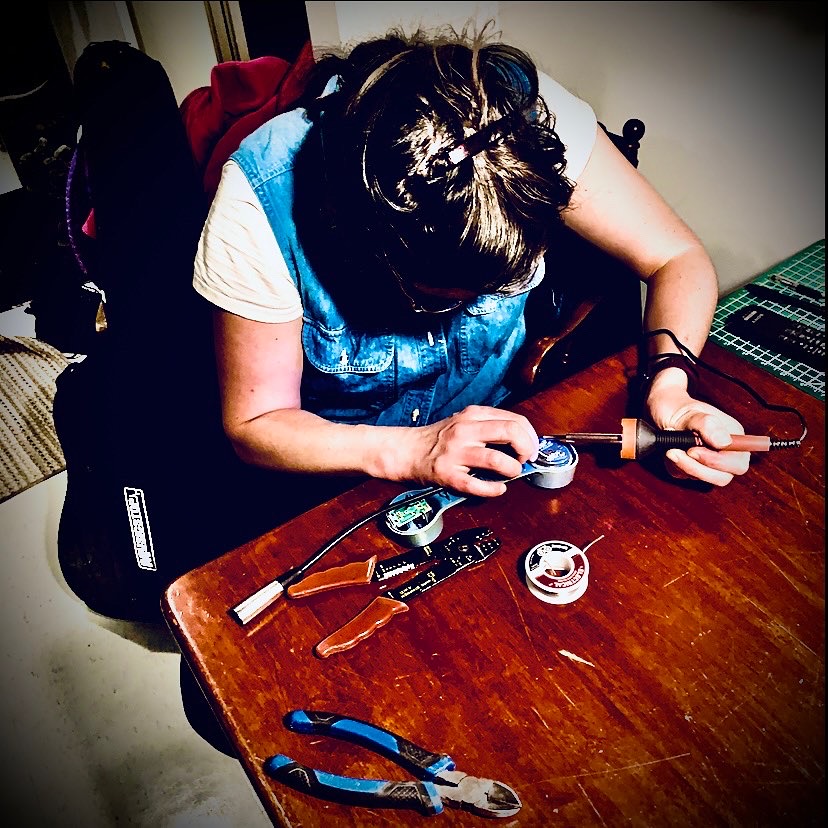
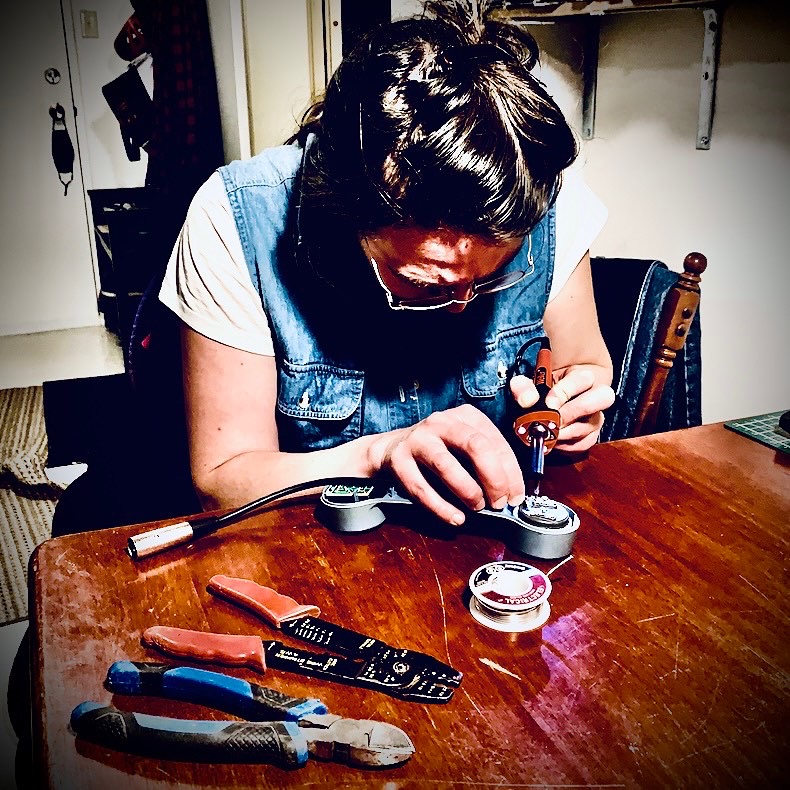
Chrissy soldered a mic wire onto an old phone receiver – and it sounds great on vocals – but more recently Tim’s been experimenting with using it to pick up banjo and sent it through pedals.
Here’s how it sounds in action – running the banjo input an Empress Reverb and Echosystem in this video, then a little Rat and Tubescreamer distortion and (at the end) a Boss Slicer.
The banjo riff is the chords to the traditional folksong “Nottamun Town” as we do it, and which Bob Dylan used for his song “Masters of War.”
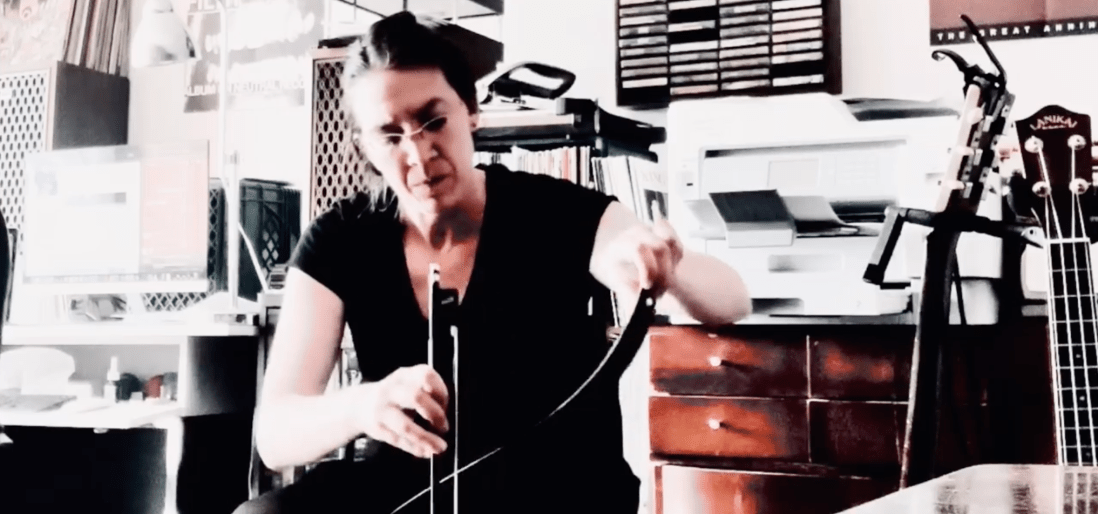
The saw might just be the most musical tool out there and one of the most attention-grabbing folk instruments ever. Here’s Chrissy demonstrating at a rehearsal. Bowing the saw sets it vibrating, which makes a musical tone, a little like rubbing a wet finger over the edge of a glass. Then by bending the blade, it changes the resonating length of the saw, which smoothly shifts the pitch. To create vibrato, you shake or bounce your knee a little.
And yes, that’s a plain old saw that’s been used and still could be used to cut wood. We’ve also been experimenting with running the sound through effects and it sounds astonishingly creepy and beautiful.
There’s a full version of Cruel Mother with two saw solos here:
Here’s a half-silly video for May Day, more the International Worker’s Day, though the pagan nature festival stuff’s great too.
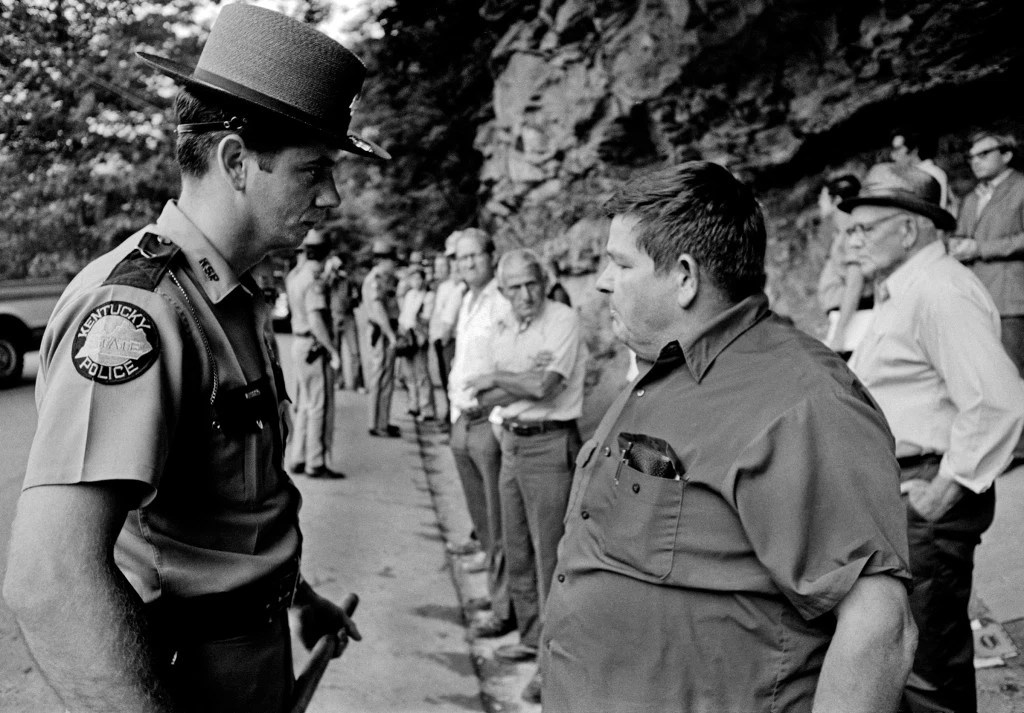
The song’s “Which Side Are You On?” which written by Florence Reece in 1931, after anti-union thugs terrorized her family during the Harlan County War. (Stick around to the end to see her sing it)
This recording’s from out upcoming album, which will go to wychwood.bandcamp.com in time.
Happy spring fertility festival, here’s a song that has something to do with the death and rebirth of a Middle Eastern sun deity. (Some of his followers have sure been misguided, but we can probably agree faith in him has inspired some pretty good music.)
That’s true pal Evelyne on loud cello and quiet vocals (perils of a single mic setup), about 10 min after we said “hey wanna do a cello solo on this song you heard for the first time last night?”
“The blackest crow that ever flew Would surely turn to white If ever I proved false to you Bright day would turn to night”
“Blackest Crow” is a traditional folksong from Appalachia and the Ozarks, likely with some Irish roots. Most modern versions go back to versions by Tommy Jarrell (1901-1985), a legendary fiddler, banjo player, and singer from the Mount Airy region of North Carolina’s Appalachian Mountains. Our version was inspired by the one done by Red Tail Ring, which seems to run though Bruce Molsky and back to Tommy.
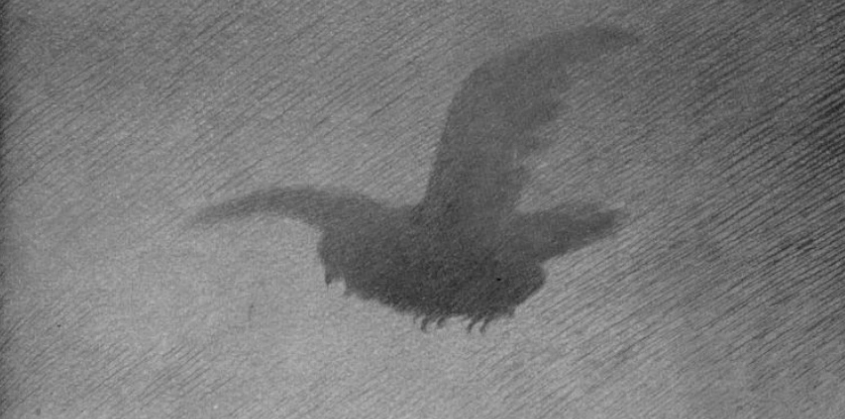
The drawing is “Pesta Kommer, 1894–95 (Plague’s Coming)” by Norwegian artist Theodor Kittelsen (1857-1914), who made it for his 1900 book “Svartedauen (Black death).” And yes, it does change over the course of the video and, no, that has nothing to do with Kittelsen and everything to do with our perverse impulses.
Our friend Evelyne played cello on this one. All the other sounds are by us (Tim and Chrissy), aside from some samples from the 1956 movie “Invasion of the Body Snatchers.”
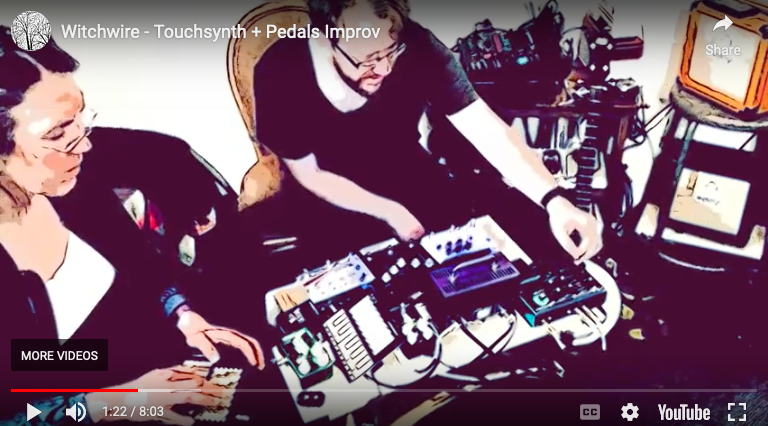
Chrissy has a new touchsynth. The arc of pandemic musicking seems to bend inevitably towards us just becoming an experimental electronic duo, presumably while changing the name of the project to Witchwire.
For the nerds who want to know how this is being made:
Chrissy is playing the Hyve TouchSynth.
It’s being fed through an Empress Reverb pedal, with a bit of delay on the side from the Empress Echosystem and distortion from the Proco Lil’ Rat and a Caline Tubescreamer clone.
The Boss Slicer is the green thing that’s chopping up the signal into harmonic/rhythmic patterns.
Things get cooler ~1min in, when Tim remembers to turn on the Orange Micro Dark amp, which – confusingly – is purple. Before that, everything was coming out of the Orange Micro Terror amp, which is, of course, orange. And white.
Having just figured out how use the looper on the Empress Reverb pedal properly, I was too excited not to share whatever I could bang through quickly. The song’s “St James Infirmary Blues.”
A more serious recording of St. James Infirmary Blues is in the works, but this was pretty inspiring.
Happy Hallowe’en – here’s one more horror story in a traditional folksong. Because we couldn’t resist taking advantage of the glorious tunnel reverb and gorgeous assembled voices for one more song, despite it being damn cold.
We didn’t rehearse this as a group and this was only the second full take we got through.
“Dreadful Wind & Rain,” also known as “Two Sisters,” “Cruel Sister,” and similar variations is a traditional folksong that goes back to at least to the 1650s. Versions – or at least songs with similar themes and stories – have been collected in England, Scotland, Ireland, North America, Scandinavia, Poland, Hungary, etc. Our version is closest to the way Gillian Welch and David Rawlings do it in the soundtrack to Songcatcher, a pretty good film about collecting folksongs in Appalachia in the early 1900s



 Check out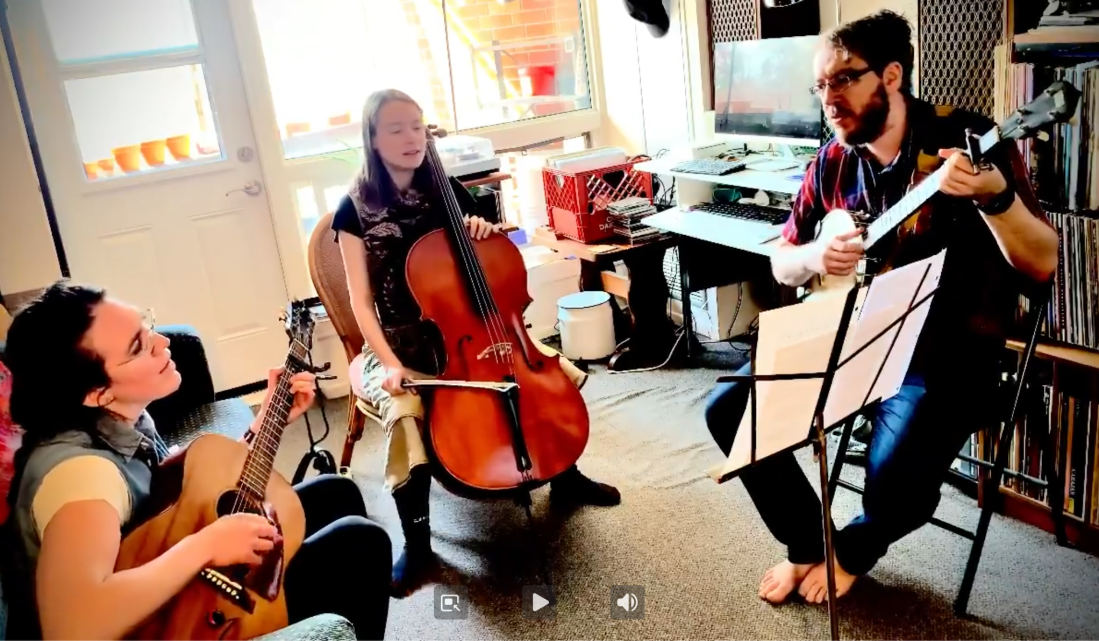


 Blackgrass