Wayfaring Stranger

“Wayfaring Stranger” is a traditional gospel song first recorded in the 1800s, with roots that likely stretch back to an old German hymn from 1666 (“Ich bin ein Gast auf Erden” by Johann Georg Ebeling and Paul Gerhardt).

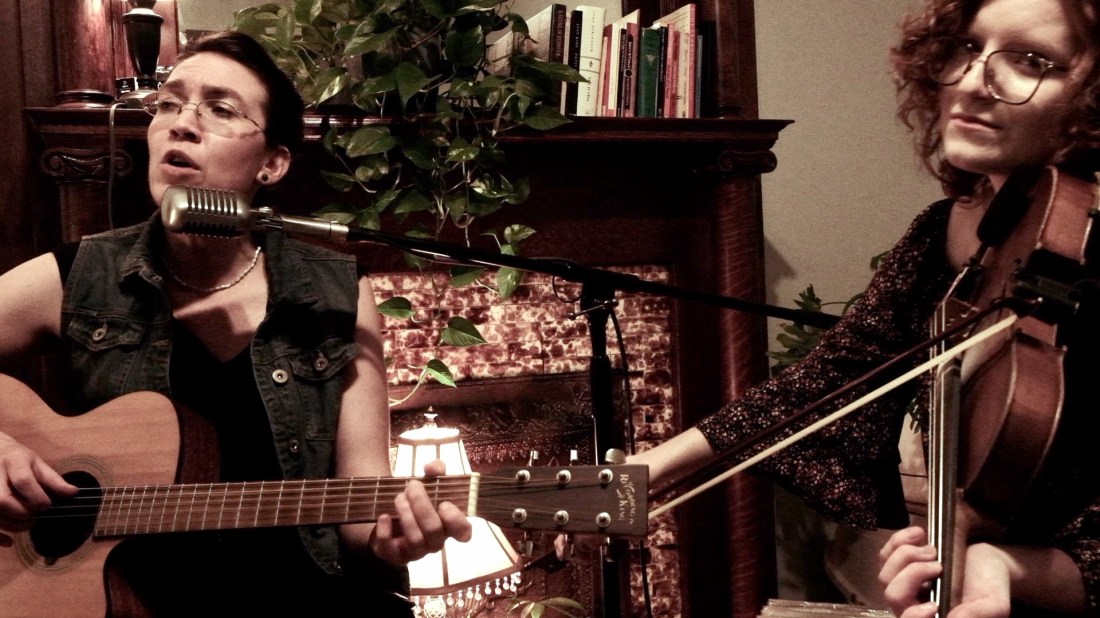
This is the words and chords to “Wayfaring Stranger” as we do it, for example in this video.

Wayfaring Stranger

Refrain: Am G Am — / Dm E(7) Am —
I’m only going over Jordan
I’m only going over home

  1. I’m just a poor wayfaring stranger
    A-travelling through this world of woe
    But there’s no sickness, toil, nor danger
    In that bright land to which I go
    I’m going there to see my father
    I’m going there no more to roamVerses:
    Am G Am — / Dm — Am E
    7 / 1st / Dm E(7) Am —
    F — C — / F — — E7 [pause]
  2. I know dark clouds will gather round me
    I know my way is rough and steep
    But beauteous fields lie just beyond me
    Where the redeemed their vigil keep
    I’m going there to see my sister
    She said she’ll meet me when I come
  3. I want to wear that crown of glory
    When I get home to that bright land
    I want to shout salvation’s story
    In concert with that blood-washed band
    I’m going there to see my children
    They’ve gone before me, one by one

Chords Symbols

Here’s some help deciphering our chord shorthand:

/
A slash divides the chords for one line of lyrics from the next.


A dash means repeat the previous chord.

C FG
For an example of a ‘squeeze chord’ like this, you would play the F & G  chords in the same amount of time you would play the C. This is a proportional way of indicating the rhythm of chord changes.


A quotation mark means repeat the chords from the previous line

1st, 2nd, etc.
Play the chords from the 1st, 2nd, etc., line

Here’s more details and examples, if this isn’t making a lot of sense to you.
St James Infirmary Blues

Playing St James Infirmary Blues in thebedroom

“St James Infirmary Blues” is a traditional song from New Orleans, from the days when jazz and blues were still taking form and still forms of folk music. (Cough, BLM, cough, ACAB.) It’s probably related to the old English ballad “The Unfortunate Rake/Lad/Maid/Sailor/Soldier/etc”. This would make it a blues cousin to the country ballad “The Streets of Laredo” — which showed up in Canada in forms like “The Bad Girl’s Lament.”

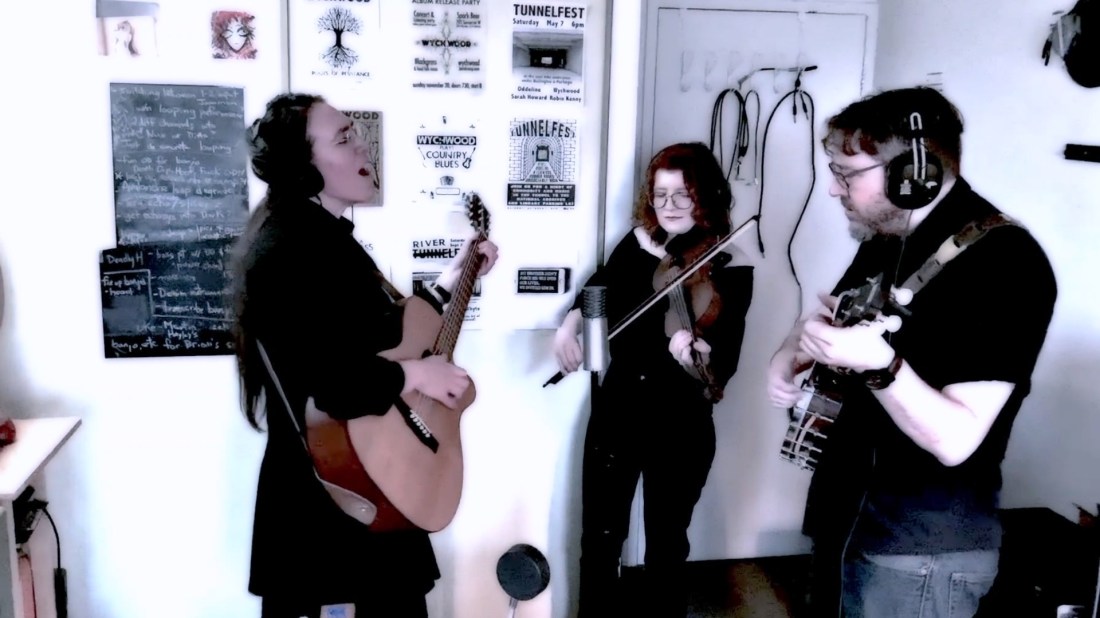
This is the words and chords to “St James Infirmary Blues” as we do it, for example in this video. Notice that Chrissy’s guitar is tuned down 2 semitones, so she uses Em chord shapes to play in the key of Dm.
https://youtu.be/wuVvt-mo0O0

St James Infirmary Blues

I went down to old Joe’s barroom
On the corner down by the square
The drinks were served as usual
And the usual crowd was there

Em B7 Em – / – Am B7 – / 1st / C7 B7 Em –
or
Dm A7 Dm – / – Gm A7 – / 1st / Bb7 A7 Dm –

At the door stood old Joe Kennedy
His eyes all bloodshot red
He turned to the crowd around him
And this is what he said

“Let her go, let her go, god bless her
Wherever she may be
She can search the whole wide world over
She’ll never find a man as sweet as me”

I followed 16 coal black horses
To pull that rubber tired hack
Well it’s 17 miles to the graveyard
But my baby’s  never coming back

I tried to keep from crying
My heart felt just like lead
She was all I had to live for
I wished it was me instead

When I die send crapshooters for pallbearers
Chorus girl to sing me a song
Put a jazz band on my hearse wagon
Raise hell as I roll along

Now that I’ve told my story
Let’s have another round of booze
And if anyone should happen to ask you
Tell em I’ve got those St. James Infirmary Blues


Chords Symbols

Here’s some help deciphering our chord shorthand:

/
A slash divides the chords for one line of lyrics from the next.


A dash means repeat the previous chord.

C FG
For an example of a ‘squeeze chord’ like this, you would play the F & G  chords in the same amount of time you would play the C. This is a proportional way of indicating the rhythm of chord changes.


A quotation mark means repeat the chords from the previous line

1st, 2nd, etc.
Play the chords from the 1st, 2nd, etc., line

Here’s more details and examples, if this isn’t making a lot of sense to you.

Blackest Crow

“Blackest Crow” is traditional folksong from Appalachia and the Ozarks, likely with some Irish roots. Most modern takes on the song go back to versions by Tommy Jarrell (1901-1985), a legendary fiddler, banjo player, and singer from the Mount Airy region of North Carolina’s Appalachian Mountains. Our version was directly inspired by the one done by Red Tail Ring, which seems to run though Bruce Molsky and back to Tommy.

This is the words and chords to “Wayfaring Stranger” as we do it, as in this video:

The Blackest Crow

in D: { A – DG D / D – Bm – } x2
As time draws near, my dearest dear
When you and I must part
How little you know of the grief and woe
In my poor aching heart

D – – – / Bm A D – / A – DG D / D – Bm –
Tis but I suffer for your sake
Believe me, dear, it’s true
I wish that you were staying here
Or I was going with you

{ A – DG D / D – Bm – } x2
I wish my breast were made of glass
Wherein you might behold
Upon my heart, your name lies wrote
In letters made of gold

D – – – / Bm A D – / A – DG D / D – Bm A
In letters made of gold, my love
Believe me when I say
You are the darling of my heart
Until my dying day

Bm A DG D  / Em – G – / A – DG D / D – Bm –
The blackest crow that ever flew
Would surely turn to white
If ever I proved false to you
Bright day would turn to night

D – – – / Bm A D – / A – DG D / D – Bm –
Bright day would turn to night, my love
The elements would mourn
The fire would freeze and be no more
The raging seas would burn

(Banjo/cello solo over D – – – / Bm A D – / A – DG D / D – Bm –)

{ A – DG D / D – Bm – } x2
So when you’re on some distant shore
Think of your absent friend
And when the wind blows high and clear
A line to me pray send

D – – – / Bm A Bm – / A – DG D / D – Bm A
And when the wind blows high and clear
Pray send it, love, to me
That I might know by thine own hand
How time has gone with thee

Chords Symbols

Here’s some help deciphering our chord shorthand:

/
A slash divides the chords for one line of lyrics from the next.


A dash means repeat the previous chord.

C FG
For an example of a ‘squeeze chord’ like this, you would play the F & G  chords in the same amount of time you would play the C. This is a proportional way of indicating the rhythm of chord changes.


A quotation mark means repeat the chords from the previous line

1st, 2nd, etc.
Play the chords from the 1st, 2nd, etc., line

Here’s more details and examples, if this isn’t making a lot of sense to you.
Red River Valley

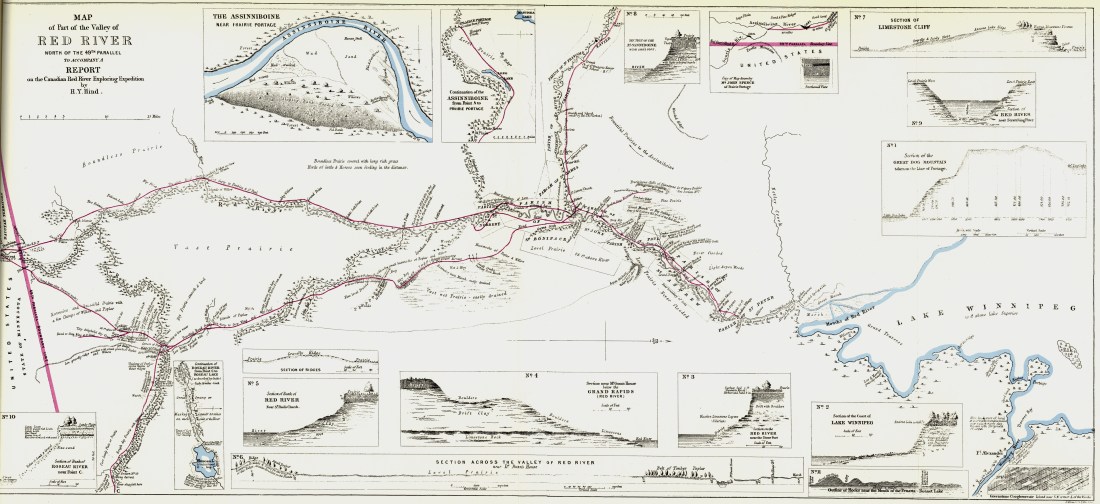
“Red River Valley” is a traditional folksong that’s supposed to describe the plight of a Métis woman who falls for an east-coast soldier, member of the 1870 Wolseley expedition sent to put down the Louis Riel-led Red River Rebellion/Resistance…

While strange things happen during times of war, this sounds like a story that probably says more about the colonial imagination than it does about any actual Métis person! (You know, a feminized Indigenous other haplessly desiring an indifferent Canadian military man sure fits well with certain attitudes.)

Of course, it’s also a beautiful song about saying good-bye to someone you love.

The folklorist Edith Fowke was the first one to show that “Red River Valley” came from the Northern Red River and not the southern one that runs through Texas, Oklahoma, and Arkansas, as Americans had been blithely assuming for decades.

This is the words and chords to “Red River Valley” as we do it, for example in this solo video.

Red River Valley

Chorus:
Come and sit by my side if you love me
Do not hasten to bid me adieu
But remember the Red River Valley
And the one who has loved you so true

C G7 C – / – – G7 – / C C7 F – / C G7 C –

1
From this valley they say you are going
We will miss your bright eyes and sweet smile
For they say you are taking the sunshine
Which has brightened our pathway a while

2
It’s a long time, you know, I’ve been waiting
For the words that you never did say
But alas! all my fond hopes have vanished
For they say you are going away

3
As you go to your home by the ocean
May you never forget those sweet hours
That we spent in the Red River Valley
And the love we exchanged ‘midst its bowers

Chords Symbols

Here’s some help deciphering our chord shorthand:

/
A slash divides the chords for one line of lyrics from the next.


A dash means repeat the previous chord.

C FG
For an example of a ‘squeeze chord’ like this, you would play the F & G  chords in the same amount of time you would play the C. This is a proportional way of indicating the rhythm of chord changes.


A quotation mark means repeat the chords from the previous line

1st, 2nd, etc.
Play the chords from the 1st, 2nd, etc., line

Here’s more details and examples, if this isn’t making a lot of sense to you.
Jubilee

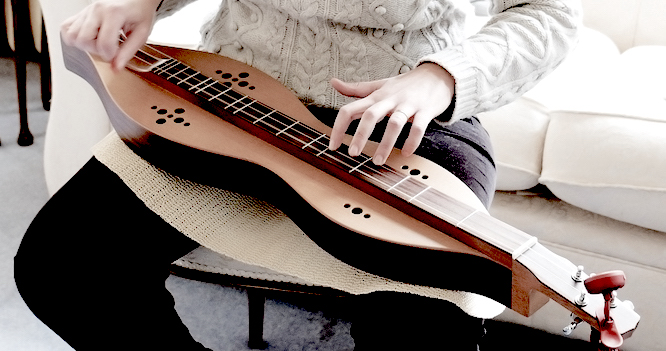
Jubilee is a traditional Appalachian folksong and our version is based on the gorgeous version Jean Ritchie did.

This is the words and chords to “Jubile” as we do it, for example in this solo video:

Jubilee

It’s all out on the old railroad, it’s all out on the sea
All out on the old railroad, far as I can see
Swing and turn, Jubilee, live and learn, Jubilee

    D  – / DBm GD / G  D / Bm GD

Hardest work I ever done, working on the farm
Easiest work I ever done, swinging my true love’s arm
Swing and turn, Jubilee…

If I had a needle and thread, as fine as I could sew
I’d sew my true love to my side & down this creek I’d go/Swing…

If I had no horse to ride, I’d be found a-calling
Up & down this rocky road, looking for my darling

I won’t have no widow man, neither will my cousin
You can get such stuff as that for fifteen cents a dozen

Coffee grows on a white oak tree, sugar runs in brandy
Girls are pure as a lump of gold, boys as sweet as candy


Chords Symbols

Here’s some help deciphering our chord shorthand:

/
A slash divides the chords for one line of lyrics from the next.


A dash means repeat the previous chord.

C FG
For an example of a ‘squeeze chord’ like this, you would play the F & G  chords in the same amount of time you would play the C. This is a proportional way of indicating the rhythm of chord changes.


A quotation mark means repeat the chords from the previous line

1st, 2nd, etc.
Play the chords from the 1st, 2nd, etc., line

Here’s more details and examples, if this isn’t making a lot of sense to you.