Happy spring fertility festival, here’s a song that has something to do with the death and rebirth of a Middle Eastern sun deity. (Some of his followers have sure been misguided, but we can probably agree faith in him has inspired some pretty good music.)
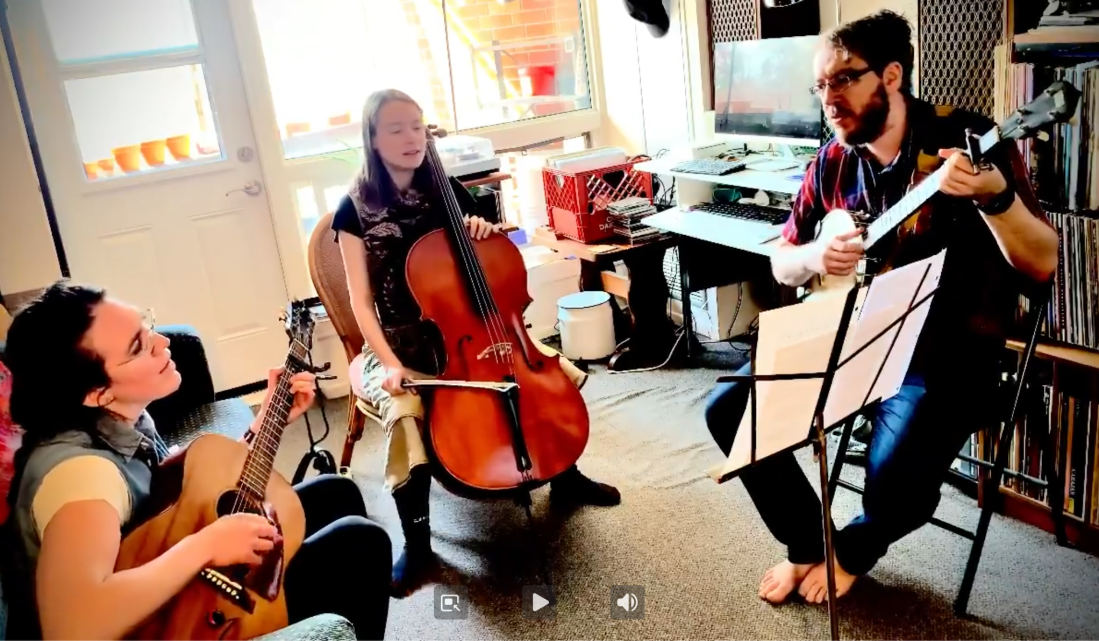
That’s true pal Evelyne on loud cello and quiet vocals (perils of a single mic setup), about 10 min after we said “hey wanna do a cello solo on this song you heard for the first time last night?”
“The blackest crow that ever flew Would surely turn to white If ever I proved false to you Bright day would turn to night”
“Blackest Crow” is a traditional folksong from Appalachia and the Ozarks, likely with some Irish roots. Most modern versions go back to versions by Tommy Jarrell (1901-1985), a legendary fiddler, banjo player, and singer from the Mount Airy region of North Carolina’s Appalachian Mountains. Our version was inspired by the one done by Red Tail Ring, which seems to run though Bruce Molsky and back to Tommy.
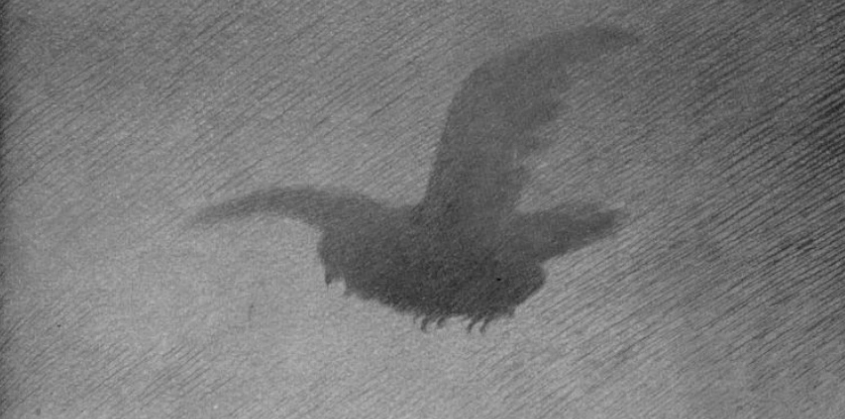
The drawing is “Pesta Kommer, 1894–95 (Plague’s Coming)” by Norwegian artist Theodor Kittelsen (1857-1914), who made it for his 1900 book “Svartedauen (Black death).” And yes, it does change over the course of the video and, no, that has nothing to do with Kittelsen and everything to do with our perverse impulses.
Our friend Evelyne played cello on this one. All the other sounds are by us (Tim and Chrissy), aside from some samples from the 1956 movie “Invasion of the Body Snatchers.”
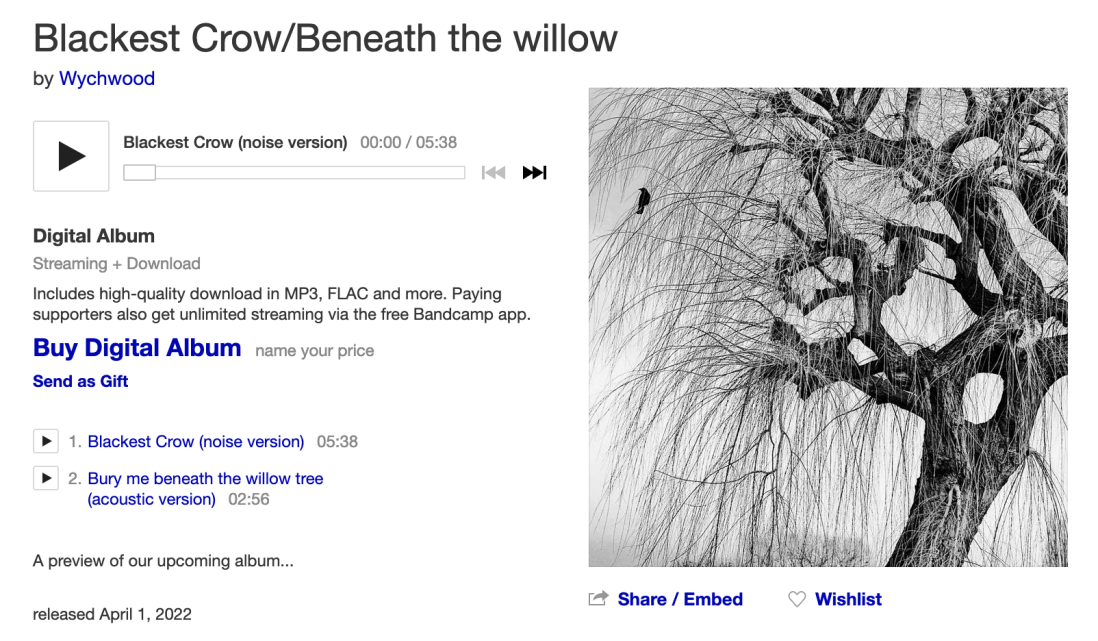
Hey friends, we’re pretty excited to share a couple songs on bandcamp, as a preview of an album we’ve been working on through much of the pandemic. “Blackest Crow” is the first recording we’ve made that really captures that idea of blackgrass that’s been motivating us all along, and “Bury me beneath the weeping willow” is an actually decent acoustic recording, so we’re pretty proud and excited.
Renaissance woman and true friend Evelyne Russell played cello on “Blackest Crow” and sang on “Bury Me.” We’re probably contractually obligated to point out that none of the effects on her cello or ugly noises on “Blackest Crow” generally are her fault. There will be all-acoustic and black noise versions of just about every song on that album, so you’ll be able to pick your poison then.
In conclusion, please wander over to bandcamp and take a listen.
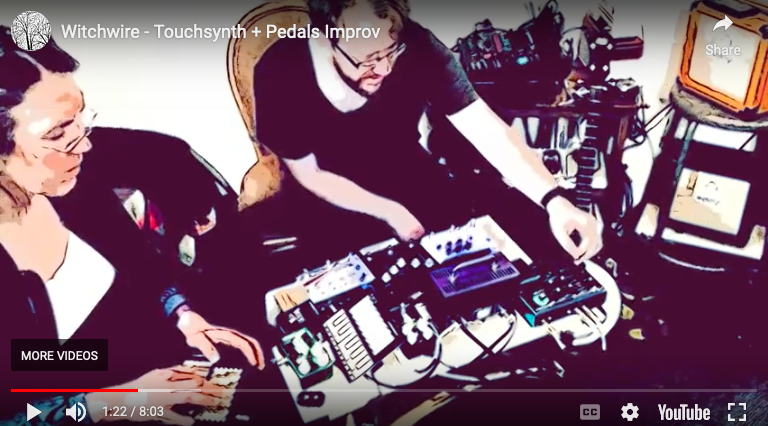
Chrissy has a new touchsynth. The arc of pandemic musicking seems to bend inevitably towards us just becoming an experimental electronic duo, presumably while changing the name of the project to Witchwire.
For the nerds who want to know how this is being made:
Chrissy is playing the Hyve TouchSynth.
It’s being fed through an Empress Reverb pedal, with a bit of delay on the side from the Empress Echosystem and distortion from the Proco Lil’ Rat and a Caline Tubescreamer clone.
The Boss Slicer is the green thing that’s chopping up the signal into harmonic/rhythmic patterns.
Things get cooler ~1min in, when Tim remembers to turn on the Orange Micro Dark amp, which – confusingly – is purple. Before that, everything was coming out of the Orange Micro Terror amp, which is, of course, orange. And white.
Chrissy’s organizing a carol song walk this Sunday at 2pm through the Log Drive Cafe, here’s the info:
You’re invited to come carolling Sunday Dec.12 at 2pm. We will meet at Minto Park and walk from there.
What’s a Song Walk? A good old-fashioned carolling session with some walking in between songs. Everyone will have the chance to request or lead a song and doing so is very much encouraged.
We will be singing from a booklet compiled by Maura Volante, a fine local singer and community singing.
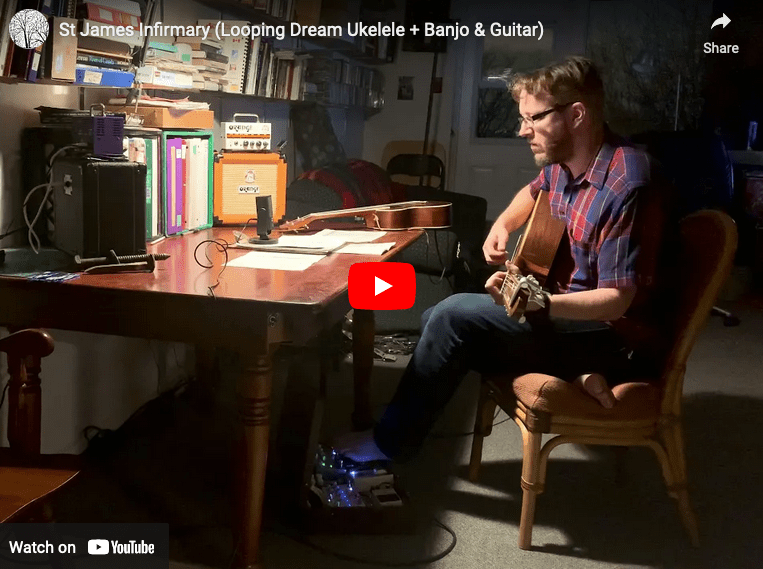
Having just figured out how use the looper on the Empress Reverb pedal properly, I was too excited not to share whatever I could bang through quickly. The song’s “St James Infirmary Blues.”
A more serious recording of St. James Infirmary Blues is in the works, but this was pretty inspiring.
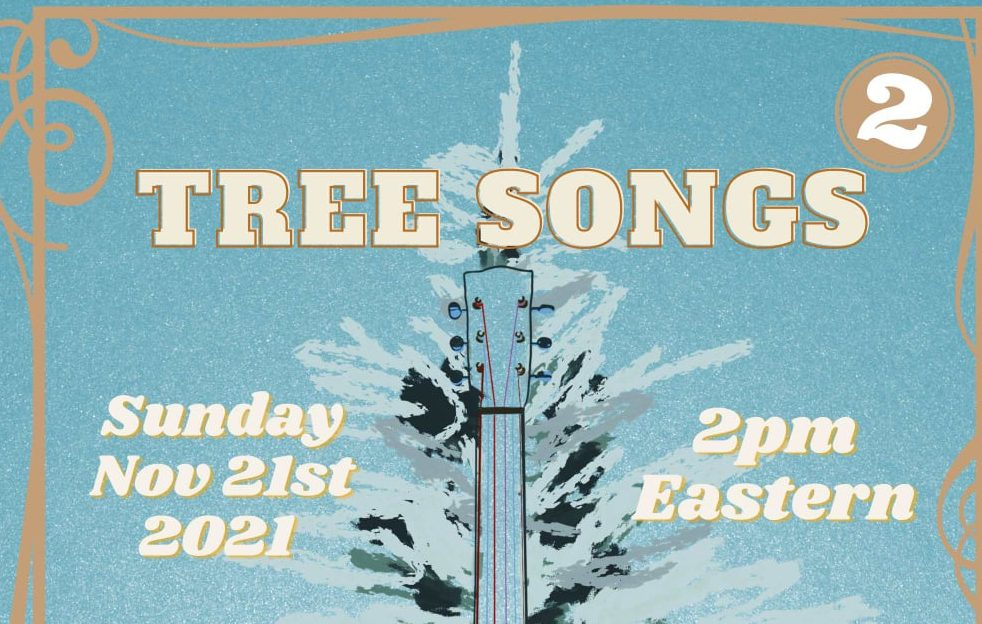
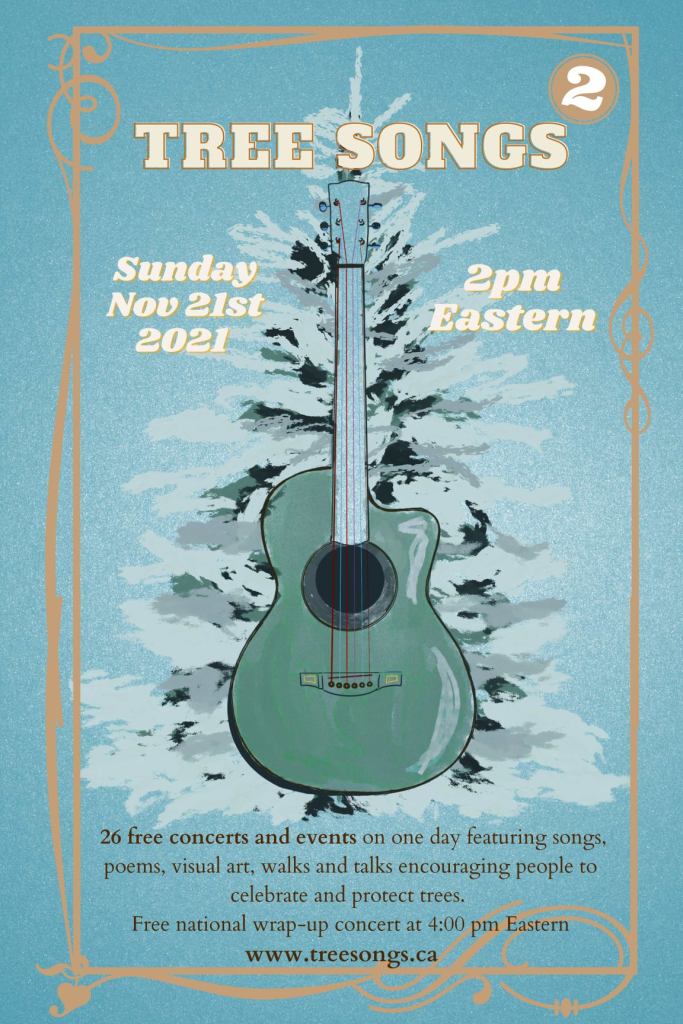
Tim will be playing a song or three at the online Tree Songs event, in support of saving trees in the Experimental Farm from a hospital/condo development that should go somewhere else.
Check out Tree Songs Songs and Reimagine Ottawa and their websites and all the things. And follow the Leveller if you want more critiques of developers and politicians eating up green public space.
Happy Hallowe’en – here’s one more horror story in a traditional folksong. Because we couldn’t resist taking advantage of the glorious tunnel reverb and gorgeous assembled voices for one more song, despite it being damn cold.
We didn’t rehearse this as a group and this was only the second full take we got through.
“Dreadful Wind & Rain,” also known as “Two Sisters,” “Cruel Sister,” and similar variations is a traditional folksong that goes back to at least to the 1650s. Versions – or at least songs with similar themes and stories – have been collected in England, Scotland, Ireland, North America, Scandinavia, Poland, Hungary, etc. Our version is closest to the way Gillian Welch and David Rawlings do it in the soundtrack to Songcatcher, a pretty good film about collecting folksongs in Appalachia in the early 1900s
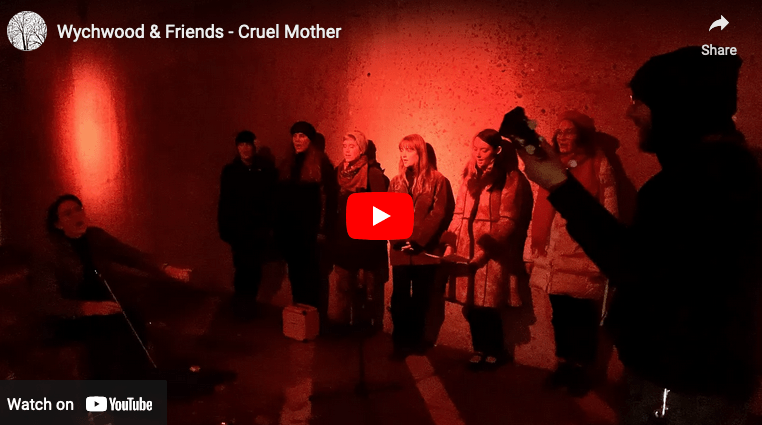
In the spirit of the Hallowe’en season, here’s our epic take on the traditional folksong “Cruel Mother,” a tragic ghost story that only seems to get more relevant all the time. (Spoiler alert: she’s not actually cruel, just cruelly alone and trapped by patriarchal forces.)
The video features Oddeline & Robin kenny and a whole crew of stellar friends, live from a tunnel near the Kitchissippi River. We didn’t rehearse this as a group and this was only the second full take we got through.
Joshua John Kitz shot the video, wielding the (phone) camera artistic-like. We figure this is the beginning of his career as a videographer.
“Cruel Mother” is a folksong and traditional ballad from England that likely goes back to the 1600s in some form, with versions proliferating through much of the English-speaking world. The words we sing stitch together a few different versions collected by Francis James Child (it’s Child Ballad 20, for those who care). Musically, we were particularly inspired by the Frankie Armstrong’s raw and spine-tingling acapella version from her 1972 album Lovely on the Water. (https://youtu.be/X3MTAkj6phc)





 Blackgrass